
Social media is full of advice about “healing your nervous system.”
From ice baths and breathwork to supplements and vagus nerve gadgets, it can be difficult to separate evidence-based strategies from the latest wellness trend.
The truth is that your nervous system isn’t something that typically needs to be “fixed.” Instead, many people benefit from learning how to better support their body’s natural ability to recover from stress.
Whether you’re an athlete, a busy professional, a parent, or someone simply feeling overwhelmed by everyday life, improving nervous system regulation can help you feel calmer, sleep better, recover faster, and improve overall well-being.
At Chill N Out Clearwater, we focus on science-backed recovery tools that help support the body’s natural recovery processes and promote a healthier response to physical and mental stress.
What Does Nervous System Regulation Mean?
Your autonomic nervous system has two primary branches:
Sympathetic Nervous System
Often called the “fight-or-flight” system, it prepares your body to respond to stress.
This response increases:
- Heart rate
- Alertness
- Muscle tension
- Stress hormone release
While this response is important, many people spend too much time in a heightened state of stress.
Parasympathetic Nervous System
Often called the “rest-and-digest” system, this branch helps your body:
- Recover from stress
- Support digestion
- Promote relaxation
- Improve sleep quality
- Restore energy
Healthy nervous system regulation involves your body’s ability to shift efficiently between these two systems as needed.
Signs Your Nervous System May Need More Recovery Support
Common signs include:
- Chronic stress
- Poor sleep
- Fatigue
- Muscle tension
- Brain fog
- Difficulty recovering from workouts
- Feeling overwhelmed by daily demands
- Increased aches and pains
While these symptoms can have many causes, they often indicate that your body could benefit from more intentional recovery practices.
Science-Backed Ways to Support Nervous System Health
Prioritize Quality Sleep
Sleep is one of the most powerful recovery tools available.
During sleep, the body performs essential maintenance processes that support brain function, hormone balance, tissue repair, and nervous system recovery.
Consistent sleep schedules, reduced evening screen exposure, and stress management practices can help improve sleep quality.
Exercise Regularly
Physical activity helps train the nervous system to become more resilient.
Research consistently shows that regular exercise can:
- Reduce stress
- Improve mood
- Support cognitive function
- Improve sleep quality
- Enhance recovery capacity
The goal isn’t necessarily more exercise—it’s balancing training with proper recovery.
Manage Chronic Stress
Stress itself isn’t the problem.
The challenge occurs when the body never gets enough time to recover from it.
Helpful strategies include:
- Walking outdoors
- Mindfulness practices
- Deep breathing
- Spending time with friends and family
- Taking recovery breaks throughout the day
Use Recovery Modalities That Support Recovery
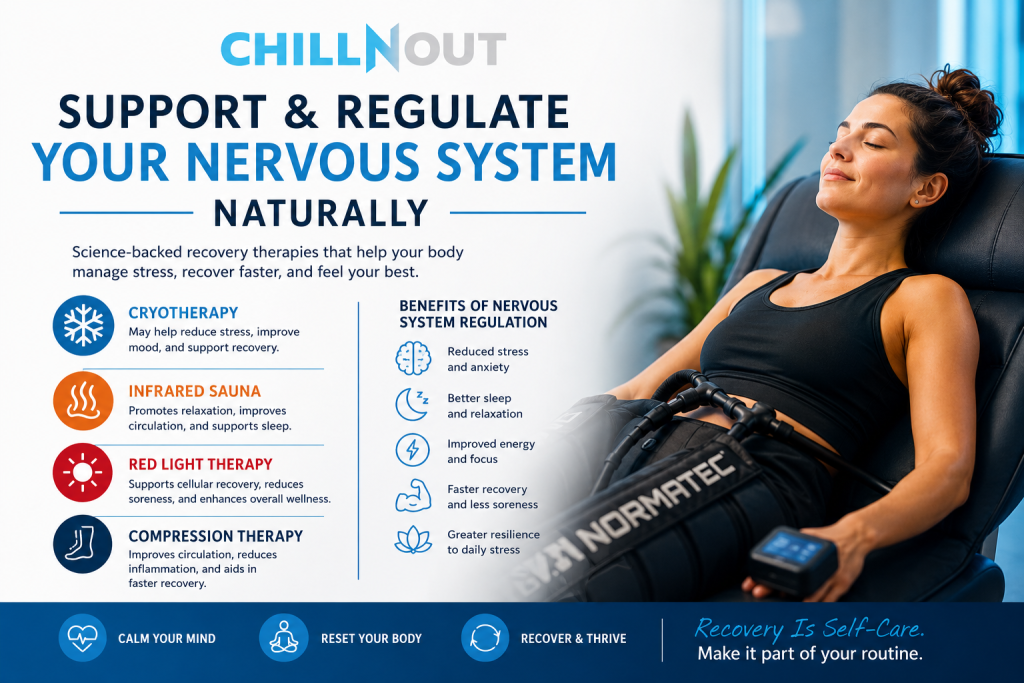
Recovery therapies can help create an environment that encourages relaxation, circulation, and recovery.
At Chill N Out, our four recovery modalities are designed to complement a healthy lifestyle and recovery routine.
How Cryotherapy May Support Nervous System Regulation
Whole-body cryotherapy exposes the body to extremely cold temperatures for a brief period, typically 2-3 minutes.
Research suggests cold exposure may:
- Trigger the release of norepinephrine
- Improve alertness and mood
- Support recovery from exercise
- Help reduce perceived stress
- Promote resilience to physical stressors
Many clients report feeling energized, refreshed, and mentally clear after a cryotherapy session.
How Infrared Sauna May Help Promote Relaxation
Infrared sauna sessions provide gentle heat that can help encourage relaxation and recovery.
Potential benefits include:
- Temporary muscle relaxation
- Improved circulation
- Stress reduction
- Enhanced relaxation
- Support for healthy sleep habits
Many people find infrared sauna sessions particularly helpful after demanding workdays or intense training.
How Red Light Therapy Supports Recovery
Red light therapy has been studied for its effects on cellular energy production and recovery.
Potential benefits include:
- Support for muscle recovery
- Reduced exercise-related soreness
- Improved recovery between workouts
- Support for overall wellness
When the body recovers more efficiently, the nervous system often experiences less overall stress load.
How Compression Therapy Can Help
Compression therapy helps promote circulation through rhythmic pressure applied to the legs and hips.
Benefits may include:
- Improved circulation
- Reduced feelings of heaviness in the legs
- Enhanced recovery after activity
- Relaxation during treatment
Many clients use compression therapy as an opportunity to slow down, relax, and support recovery.
The Best Recovery Strategy Isn’t One Thing
One of the biggest misconceptions in wellness is that a single technique will “heal” everything.
The reality is that nervous system health is built through consistent habits:
- Quality sleep
- Regular movement
- Healthy nutrition
- Stress management
- Recovery practices
- Adequate downtime
Recovery therapies can be valuable tools, but they work best when combined with healthy lifestyle habits.
Recovery Is More Than Physical
Your nervous system influences nearly every aspect of your health, from sleep and energy levels to recovery, mood, and overall resilience.
Supporting your nervous system isn’t about chasing the latest trend.
It’s about giving your body the tools and time it needs to recover from the demands of everyday life.
At Chill N Out Clearwater, we believe recovery should be accessible, affordable, and part of a sustainable wellness routine.
Whether you’re recovering from intense workouts, long workdays, or simply the stress of modern life, our science-backed recovery services can help support your wellness journey.